Continental Charter
Common SenseThe Continental Charter is Thomas Paine’s proposed constitutional bond for the United Colonies, intended to turn continental independence into a representative government with defined powers and protected rights. Paine presents it not as a finished constitution but as a framework to be drafted through a broadly authorized conference, joining local and continental institutions under the principle that law, rather than a monarch, should rule.
Purpose and Political Foundation
Paine’s proposal grows from his distinction between society and government. Society arises from human needs and mutual attachment; government becomes necessary when moral obligation proves insufficient to restrain wrongdoing. Because government is a remedy for that failure rather than a natural good in itself, its legitimacy depends on its ability to provide security with the least expense and greatest benefit. The Charter is meant to give that limited, protective power a lawful form.
The proposed bond also answers a political problem created by dependence on Britain. Paine argues that a distant government, thousands of miles away and ignorant of local conditions, cannot manage American affairs justly or conveniently: petitions require months to travel and still more time for answers and explanations. He further contends that dependence draws the colonies into European wars and quarrels, damaging their trade and setting them against nations with which they otherwise have no dispute. A continental charter would therefore serve both as an instrument of self-government and as a basis for acting together rather than remaining subordinate to Britain.
Drafting Authority and Institutions
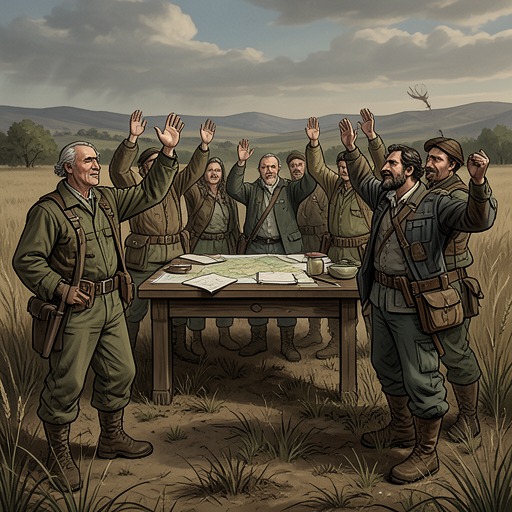
Paine proposes a Continental Conference as an intermediate body between the people and the institutions that would govern them. Its membership would combine twenty-six delegates from Congress, two for each colony; two members from each colony’s assembly or provincial convention; and five representatives of the people at large from each province. Those popular representatives would be chosen by qualified voters who attended for that purpose, either in a provincial capital or, where more convenient, in two or three populous places.
The design brings together what Paine calls knowledge and power. Members of Congress and the assemblies would contribute experience in public affairs; representatives chosen by the people would give the conference legal authority grounded in popular consent. Its specific task would be to frame the Charter. Once that work was complete, the conference would dissolve, leaving the bodies constituted under the new charter to serve as the continent’s legislators and governors.
The Charter would establish the number and method of choosing members of Congress and the assemblies, specify when those bodies would sit, and draw the boundary between their responsibilities and jurisdictions. The distinction is central to the plan: assemblies would handle domestic business, while their work would remain subject to the authority of a Continental Congress. Paine insists that the colonies’ strength is continental, not merely provincial, making a common framework necessary without erasing the role of local institutions.
Representation and Continental Government
Paine’s accompanying suggestions give the proposed system more detail. Assemblies would meet annually and have a president only; their representation should be more equal, and their business wholly domestic under Congress’s authority. Each colony would be divided into six, eight, or ten convenient districts, each sending delegates to Congress, with at least thirty delegates from every colony and at least 390 in Congress overall.
The presidency of Congress would rotate through a lottery-based procedure. At each Congress, one colony would be drawn from the thirteen; Congress would then elect its president by ballot from that colony’s delegates. In the following Congress, the previous president’s colony would be omitted from the draw, and the rotation would continue until all thirteen colonies had their turn. Paine also proposes that a measure should require at least three-fifths of Congress to count as a majority, a threshold intended to make lawmaking depend on more than a narrow advantage.
The emphasis on representation responds to Paine’s warning that a small or unequal body of electors or representatives can place power in too few hands. He illustrates the danger with a Pennsylvania assembly vote on the Associators’ petition: only twenty-eight members were present, and eight Bucks County members voted against it. Had seven members from Chester County joined them, two counties alone could have determined the province’s decision. For Paine, this example shows why the Charter must define representation carefully and why the public should not surrender political authority to a small group acting in its name.
Rights, Limits, and Political Meaning
The Charter would secure freedom and property for all, and, above all, the free exercise of religion according to conscience. Paine later clarifies the charter’s character as a solemn bond: the whole community would undertake to uphold the rights of every part, including religious liberty, personal freedom, and property. Its force would thus lie not only in allocating offices and jurisdictions but in binding the continental government to protect individuals and local communities.
Paine’s broader principle is that the purpose of government is security, not royal authority for its own sake. He contrasts a free country, where law ought to be king, with an absolute government, where the king is law. His imagined public ceremony for proclaiming the Charter makes that contrast visible: a crown would be placed upon the charter, then demolished and scattered among the people, marking the rejection of monarchy as the source of law and the return of political authority to the public.
The proposal remains a set of hints rather than a completed constitution, and Paine explicitly leaves room for wiser and more capable people to improve it. Its defining ambition is nevertheless clear: to make continental unity compatible with local government, broad representation, and enforceable protections for conscience, liberty, and property. The Charter is the institutional bridge between separation from Britain and a self-governing political order.